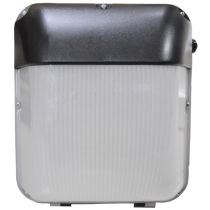
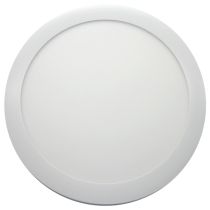
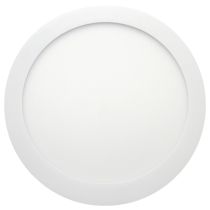
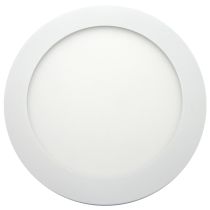
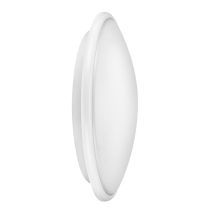
Explore Bell emergency LED lighting designed to provide essential illumination when the normal mains supply fails. The range includes emergency bulkheads, downlights, panels, battens and other fittings for corridors, stairways, exits and communal areas. Choose from maintained, non-maintained and selected self-test options to suit different building requirements. Always check the emergency duration, operating mode and installation specifications before selecting a fitting.
Emergency lighting is designed to provide illumination and directional guidance when the normal lighting supply fails. Bell’s Spectrum range includes exit signs, exit blades, bulkheads, twin spots and discreet emergency downlights for different areas and installation requirements.
Escape-Route Guidance
Exit Signs and Exit Blades
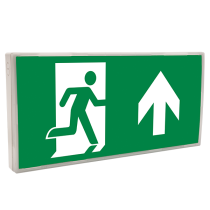
Illuminated exit legends help occupants identify the direction of escape. The correct legend, arrow direction, mounting position and viewing distance must suit the planned escape route.
Emergency Illumination
Bulkheads and Downlights
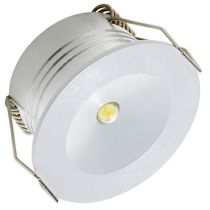
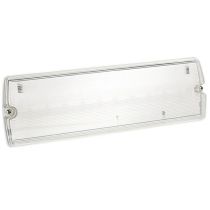
Emergency bulkheads and downlights can provide illumination across escape routes, open areas and changes in direction, subject to the complete emergency-lighting design.
Higher-Output Coverage
Twin Spots
Twin-spot fittings use adjustable lamp heads to direct emergency illumination across larger, higher or more demanding areas.
Choose the Fitting Type
Bell Spectrum Emergency Lighting Formats
Fitting type
Primary purpose
Selection considerations
Exit sign or exit box
Clearly display an escape-route legend
Arrow direction, legend format, viewing distance and mounting position
Exit blade
Provide a slim, highly visible illuminated legend
Surface or suspended mounting, included legends and viewing direction
Emergency bulkhead
Provide robust emergency illumination
IP and IK ratings, mounting method and maintained operation
Emergency downlight
Provide discreet open-area or corridor illumination
Recessed or surface mounting, lens distribution and ceiling position
Twin spot
Direct higher emergency output across larger areas
Mounting height, head adjustment and required coverage
High-power bulkhead
Provide increased output from a robust fitting
Area size, environment, IP rating and photometric performance
Product selection cannot be based on fitting type alone. Quantity, position, spacing and output should follow an emergency-lighting design prepared from the building layout, escape routes and risk assessment.
Operating Modes
Maintained or Non-Maintained Emergency Lighting?
Maintained
Illuminated During Normal Operation
A maintained emergency fitting can remain illuminated while the normal mains supply is present and continue at its specified emergency output if that supply fails.
Commonly used for illuminated exit signs
May suit continuously occupied public areas
Check the permitted switching arrangement
Non-Maintained
Activates After Mains Failure
A non-maintained fitting normally remains off while the mains supply is healthy and switches to battery-powered emergency operation when the monitored supply fails.
Used where continuous illumination is unnecessary
Requires a permanent unswitched supply for charging
Check the required emergency duration
Selected Bell Spectrum fittings can support maintained or non-maintained configurations. Confirm the operating modes of the individual model before ordering.
Testing Options
Manual Test, Self-Test or DALI?
Manual Test
Scheduled Local Testing
Manual-test fittings require planned functional and duration tests, with results inspected and recorded as part of the building’s emergency-lighting maintenance programme.
Self-Test
Automatic Diagnostic Tests
Self-test fittings automatically perform scheduled checks and use status indicators to help identify lamp, battery or system faults, depending on the model.
DALI Emergency
Central Monitoring Integration
Selected DALI emergency products can communicate with a compatible control and monitoring system for centralised testing and status reporting.
Self-test and central monitoring can simplify routine management, but they do not remove the need for inspection, maintenance, record keeping and action when a fault is reported.
Exit Legends
Choosing an Emergency Exit Sign
Arrow Direction
Match the Escape Route
The displayed arrow must direct occupants along the intended escape route. Confirm whether the fitting includes the required legend or additional legend panels are needed.
Viewing Distance
Make the Sign Legible
The sign format and legend size must provide an appropriate viewing distance for the space. Check the product specification rather than choosing on physical width alone.
Mounting Position
Wall, Ceiling or Suspended
Choose a mounting format that keeps the legend visible along the route. Some exit blades support more than one mounting method when used with the correct components.
Environment and Durability
Check IP, IK and Mounting Requirements
IP Rating
Protection Against Moisture and Objects
Bell Spectrum products include fittings with different IP ratings. Select a model suitable for the environment and install it in accordance with its permitted mounting conditions.
IK Rating
Resistance to Mechanical Impact
Where emergency fittings are installed in exposed, public or industrial areas, consider an appropriate IK rating as part of the product selection.
The Bell range includes products with IP20 and IP65 protection and varying IK ratings. Always check the specification of the exact model rather than applying one rating to the entire Spectrum range.
Project Support
Need Help Identifying an Emergency Fitting?
If you are replacing an existing product, send us photographs of the fitting, battery and product label. We can help identify suitable Bell products, but the final selection must form part of a compliant emergency-lighting assessment and design.
What is the difference between maintained and non-maintained emergency lighting?
A maintained fitting can remain illuminated during normal mains operation and continue during a power failure. A non-maintained fitting normally remains off and activates when its monitored mains supply fails.
What does self-test emergency lighting do?
A self-test fitting automatically performs scheduled functional and duration checks and indicates its status or detected faults. The exact test sequence and indicator meanings depend on the model.
What is a DALI emergency fitting?
A DALI emergency fitting is designed to communicate with a compatible DALI control and monitoring system, allowing supported testing, status information and fault reporting to be managed centrally.
How long should an emergency light operate after a power failure?
The required emergency duration depends on the building and its emergency-lighting design. Check the rated duration of the exact fitting against the project requirements before ordering.
How often should emergency lighting be tested?
Emergency lighting requires a documented programme of regular functional tests, periodic duration tests, inspection and maintenance. The responsible person should follow the applicable requirements for the premises and the manufacturer’s instructions.
Can I replace an emergency fitting with any similar-looking model?
No. A replacement must be suitable for the emergency-lighting design, operating mode, duration, light distribution, mounting position, environment and testing system. Appearance alone is not enough to establish compatibility.
Our use of cookies
We use necessary cookies to make our site work. We'd also like to set optional cookies to help us improve it.
We won't set optional cookies unless you enable them.
Using this tool will set a cookie on your device to remember your preferences.
Necessary
Necessary cookies enable core functionality such as security, network management, and accessibility. You may disable these by changing your browser settings, but this may affect how the website functions.
Name
Description
PHPSESSID
Preserves the visitor's session state across page requests.
amzn-checkout-session-config
apay-session-set
form_key
Protects visitor's data from Cross-Site Request Forgery Attacks.
guest-view
Stores the Order ID that guest shoppers use to retrieve their order status. Used in “Orders and Returns” widgets.
language
ledgerCurrency
login_redirect
Preserves the destination page the customer was loading before being directed to log in.
mage-banners-cache-storage
Stores banner content locally to improve performance.
mage-cache-sessid
The value of this cookie triggers the cleanup of local cache storage.
mage-cache-storage
Local storage of visitor-specific content that enables ecommerce functions.
mage-cache-storage-section-invalidation
Forces local storage of specific content sections that should be invalidated.
mage-messages
Tracks error messages and other notifications that are shown to the user, such as the cookie consent message, and various error messages. The message is deleted from the cookie after it is shown to the shopper.
private_content_version
Appends a random, unique number and time to pages with customer content to prevent them from being cached on the server.
section_data_ids
Stores customer-specific information related to shopper-initiated actions such as display wish list, checkout information, etc.
taxVatCookie
user_allowed_save_cookie, cookie_consent
Stores the user's cookie consent state for the current domain.
X-Magento-Vary
Configuration setting that improves performance when using Varnish static content caching.
Preferences
Preference cookies are used to store settings and information that changes the website look and functionality.
Name
Description
easybanner
Preserves the visitor's preferences and stats regarding shown popup blocks.
store
Remembers the user's selected language version of a website.
Marketing
Marketing cookies help us provide our visitors with relevant content, browsing history, and product recommendations.
Name
Description
product_data_storage
Stores configuration for product data related to Recently Viewed / Compared Products.
recently_compared_product
Stores product IDs of recently compared products.
recently_compared_product_previous
Stores product IDs of previously compared products for easy navigation.
recently_viewed_product
Stores product IDs of recently viewed products for easy navigation.
recently_viewed_product_previous
Stores product IDs of recently previously viewed products for easy navigation.
TawkConnectionTime
Tawk Chat Widget
twk_*
Tawk Chat Widget
twk_idm_key
Tawk Chat Widget cookie
_fbp
This cookie is installed by Facebook to store and track visits across websites.
Analytics
Analytics cookies help us understand how our visitors interact with the website. It helps us understand the number of visitors, where the visitors are coming from, and the pages they navigate. The cookies collect this data and are reported anonymously.
Name
Description
dc_gtm_*
Throttles request rate when Google Analytics is deployed with Google Tag Manager.
_ga, _gat, _gid, _ga_*, _gat_*
This cookie is installed by Google Analytics. They are used to collect information about how visitors use our website. We use the information to compile reports and to help us improve the website. The cookies collect information in a way that does not directly identify anyone.