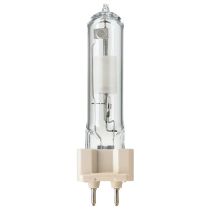
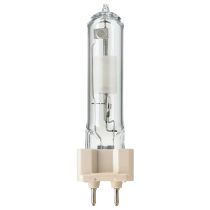
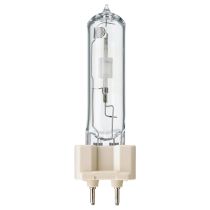
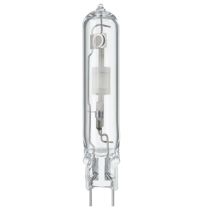
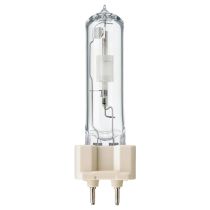
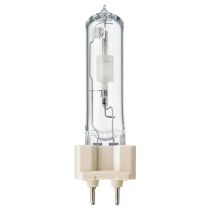
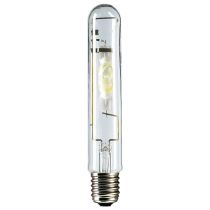
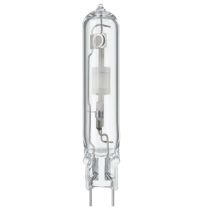
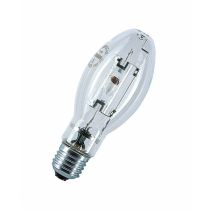
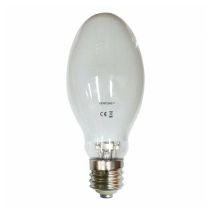
Metal Halide Lamps

Find the correct replacement for an existing metal halide fitting from our extensive range of traditional and ceramic metal halide lamps. Lightsave Home stocks hard-to-find Philips, Osram, GE, Venture, Sylvania, Radium and Crompton lamps, including CDM, CMH, HCI, HQI, HPI, HIE and HIT ranges.

Shop by the complete lamp reference, wattage, cap type and colour temperature, with options including G12, G8.5, RX7s, E27 and E40 metal halide bulbs. Many of these lamps are discontinued or increasingly difficult to source, so availability is limited to remaining stock.

Not sure which lamp you need? Match the full code printed on your old lamp—not just its wattage or cap.

View as Grid List

Items 1-30 of 98

Set Descending Direction
Page
per page

Find the Right Metal Halide Replacement Lamp

Metal halide lamps have been widely used in shops, showrooms, factories, warehouses, sports facilities, exterior floodlights and architectural luminaires. Their powerful light output and, in many ranges, excellent colour rendering made them especially effective where brightness, visual clarity and accurate product presentation mattered.

Although LED has replaced metal halide in many new installations, thousands of existing fittings still rely on a specific discharge lamp and compatible control gear. Replacing the complete installation may not always be practical, particularly when only one lamp has failed. Lightsave Home therefore continues to stock an unusually broad selection of traditional and ceramic metal halide bulbs, including discontinued and difficult-to-find references.

Our collection includes compact 20W display lamps, popular 35W, 70W and 150W retail lamps, larger 250W and 400W industrial bulbs, and specialist high-output lamps rated up to 2000W. Availability varies because many references are now obsolete or produced only in limited quantities.

Replacement guide

Metal Halide Lamp Types and Their Uses

Metal halide product codes can be confusing because manufacturers use different names for related lamp technologies. Use this table to identify the general lamp family, but always match the complete code printed on your existing lamp before ordering.

Lamp type or codeCommon format and capTypical wattagesCommon applications
CDM-T / CMH-T / HCI-T Ceramic Single-ended tubular lamp, commonly fitted with a G12 cap. 20W–150W Retail displays, track lighting, galleries, showrooms and hospitality lighting.
CDM-TC / CMH-TC / HCI-TC Compact ceramic Compact single-ended capsule, usually with a G8.5 cap. 20W–70W Compact spotlights, recessed fittings, display cabinets and smaller commercial luminaires.
CDM-TD / CMH-TD / HCI-TS Double ended Double-ended tubular lamp, commonly fitted with an RX7s cap. 35W–150W Shop lighting, architectural fittings, display lighting and compact floodlights.
CDM-R / CDM-R111 Reflector PAR or R111 reflector lamp with an E27 or GX8.5 cap. 35W–70W Focused retail lighting, galleries, exhibitions, displays and architectural accent lighting.
CDM-Rm / CMH MR16 Mini reflector Compact MR16-style reflector, normally fitted with a GX10 cap. 20W–35W Boutique displays, cabinets, hospitality interiors and precision accent lighting.
HQI-T / HSI-T / HRI-T Quartz tubular Single-ended tubular lamp, frequently using a G12 or E40 cap. 70W–1000W Commercial interiors, sports lighting, floodlighting and larger industrial installations.
HQI-TS / MH-DE Double ended Double-ended quartz tubular lamp, commonly using an RX7s cap. 70W–150W Commercial floodlights, retail lighting and architectural luminaires.
HQI-E / HIE / HIPE Elliptical Clear or coated elliptical lamp with an E27 or E40 cap. 70W–400W High-bay fittings, warehouses, exterior lighting and general commercial installations.
HIT / HPI-T High output High-output tubular lamp, commonly fitted with an E40 cap. 100W–2000W Factories, warehouses, sports facilities, large-area floodlighting and industrial sites.
Coloured metal halide Specialist Available in selected tubular, single-ended and double-ended formats. Varies Entertainment venues, events, architectural effects and specialist decorative lighting.

Important: Codes such as CDM, CMH and HCI can describe related ceramic metal halide technologies, but this does not mean that the lamps are automatically interchangeable. Always check the full lamp reference, wattage, cap, colour, control gear and permitted operating position.

Ceramic and Quartz Metal Halide Lamps

Metal halide lamps can broadly be divided into traditional quartz and ceramic types.

Traditional quartz metal halide ranges include many HQI, HPI, HIE, HIPE, HIT and HSI lamps. They were frequently installed in high-output commercial, industrial and exterior fittings.

Ceramic metal halide lamps—often identified as CMH, CDM or HCI—use a ceramic arc tube. They became particularly popular in shops, galleries and display environments because of their colour consistency and colour-rendering performance. Philips confirms that CMH lamps are also known as ceramic discharge metal halide or CDM lamps. Signify

A ceramic lamp should not automatically be used in place of a quartz lamp, even when the wattage and cap appear identical. The ballast, ignitor, lamp voltage, enclosure requirement and permitted burning position must all be compatible.

How to Identify Your Existing Lamp

The safest way to find a replacement is to copy the complete reference printed on the old lamp or its packaging. A useful lamp code may look like:

  • CDM-T 70W/830 G12
  • HCI-T 150W/942 G12
  • HQI-TS 70W/WDL RX7s
  • CMH35/TC/UVC/U/830/G8.5
  • HIE250W/U/EURO/4K
  • HIT400W/U/LU/4K

When comparing products, check all the following:

  1. Manufacturer and complete lamp code
  2. Wattage
  3. Cap or base
  4. Single-ended, double-ended or reflector construction
  5. Colour code or colour temperature
  6. Permitted operating or burning position
  7. Required ballast and ignitor
  8. Whether an enclosed luminaire is required

Do not select a lamp by appearance alone. Several metal halide bulbs can look almost identical while having different electrical or operating requirements.

Light colour guide

Understanding Metal Halide Colour Codes

Many metal halide and ceramic metal halide lamps use a three-digit code to identify their approximate colour rendering and colour temperature. Use the guide below to compare the most common options.

Colour codeTypical appearanceCommon applications
730 / 830 / 930 Approximately 3000K warm white Hotels, restaurants, boutiques, hospitality spaces and warm retail displays.
740 / 840 Approximately 4000K neutral or cool white Commercial premises, work areas, warehouses and general retail lighting.
742 / 842 / 942 Approximately 4200K neutral white Galleries, showrooms and applications requiring crisp, balanced illumination.
Daylight versions Cooler white appearance Industrial sites, exterior areas, sports facilities and specialist high-output lighting.
Coloured versions Green, magenta and other specialist colours Entertainment venues, architectural effects, events and decorative applications.

What does the first digit mean?

The first digit normally indicates the approximate colour-rendering group. For example, a code beginning with 9 generally offers higher colour rendering than a comparable code beginning with 8 or 7.

What do the last two digits mean?

The final two digits indicate the approximate colour temperature. For example, 930 commonly identifies high colour rendering combined with an approximately 3000K warm-white appearance.

Check the complete reference: colour terminology such as WDL, NDL, neutral white and daylight can vary between manufacturers and lamp ranges. Always compare the full product code rather than relying on the colour description alone.

Choosing the Correct Cap Type

G12 single-ended lamps

G12 is widely used for tubular CDM-T, CMH-T, HCI-T, HQI-T and related lamps. It is common in retail spotlights, display fittings and architectural luminaires.

G8.5 compact capsules

G8.5 lamps are smaller ceramic metal halide capsules, frequently used in compact track lights, downlights and display fittings.

RX7s double-ended lamps

RX7s metal halide lamps have electrical contacts at both ends. They are common in HQI-TS, CDM-TD and other double-ended commercial or floodlighting products.

GX10 and GX8.5 reflector lamps

These caps appear on compact MR16-style and R111 reflector lamps. The reflector and beam angle form part of the lamp specification, so check these alongside the cap.

E27 and E40 screw caps

E27 Edison Screw and E40 Giant Edison Screw bases are generally found on elliptical and larger tubular lamps. E40 is particularly common across higher-wattage commercial, industrial and exterior products.

Do Metal Halide Lamps Need a Ballast?

Yes. Metal halide lamps are high-intensity discharge lamps and require compatible control gear to start and regulate the lamp. They must not be connected directly to a normal mains lampholder unless the complete fitting has been specifically designed to operate that lamp.

The required ballast is determined by more than wattage. Quartz and ceramic lamps can have different electrical characteristics, and some fittings also use a separate ignitor. If you are uncertain, check the luminaire label and control-gear reference or consult a qualified electrician.

Can Metal Halide Lamps Be Replaced With LED?

An LED conversion may be worthwhile when energy consumption, maintenance or long-term lamp availability is a concern. However, an LED bulb with the same cap is not automatically a safe direct replacement.

Some LED retrofit lamps require the existing ballast to be bypassed or removed. Others may not fit physically, distribute light correctly or manage heat safely inside the original luminaire. For large fittings, a complete LED luminaire replacement can sometimes deliver better performance than fitting an LED lamp into ageing control gear.

If maintaining the original fitting is important, a like-for-like metal halide replacement remains the most straightforward option—provided the complete specification matches.

Hard-to-Find and Discontinued Metal Halide Bulbs

Metal halide lamps are becoming more difficult to obtain as manufacturers reduce their conventional discharge ranges. However, that does not mean every existing metal halide fitting must immediately be replaced.

Lightsave Home holds remaining stock across numerous Philips, Osram, GE, Venture, Sylvania, Radium and Crompton ranges. This includes specialist ceramic lamps, unusual reflector formats, high-wattage industrial lamps and legacy product codes that may no longer appear in current manufacturer catalogues.

Where a product is described as discontinued or available from remaining stock, future availability cannot be guaranteed. Ordering against the exact lamp reference is especially important because a later replacement may not be obtainable.
Specialist lamp support

Need Help Finding a Metal Halide Lamp?

If your lamp is discontinued, difficult to identify or no longer listed under the same reference, our team can help narrow down the available replacement options. Give us as much of the information opposite as you can.

We will compare the information supplied with the metal halide lamps currently available.

Information that will help us

  • A clear photograph of the printing on the lamp
  • The complete lamp code or reference
  • The lamp wattage and cap type
  • A photograph of the label inside the luminaire
  • The ballast or control-gear reference, where safely accessible

Please do not dismantle a fitting. Only photograph labels and components that are already safely visible, with the power isolated where appropriate.

Frequently Asked Questions: Metal Halide Lamps

Are metal halide bulbs still available?

What is the difference between CMH, CDM and HCI lamps?

Can I replace a metal halide lamp with one of the same wattage?

What do 830, 840, 930 and 942 mean?

Do metal halide lamps require a ballast?

Why does my metal halide lamp take time to reach full brightness?

Can I use an LED bulb in my existing metal halide fitting?