Philips Ultra Efficient Bulbs Explained: The Complete Buying Guide
Why Philips Ultra Efficient Bulbs Are Changing Home Lighting
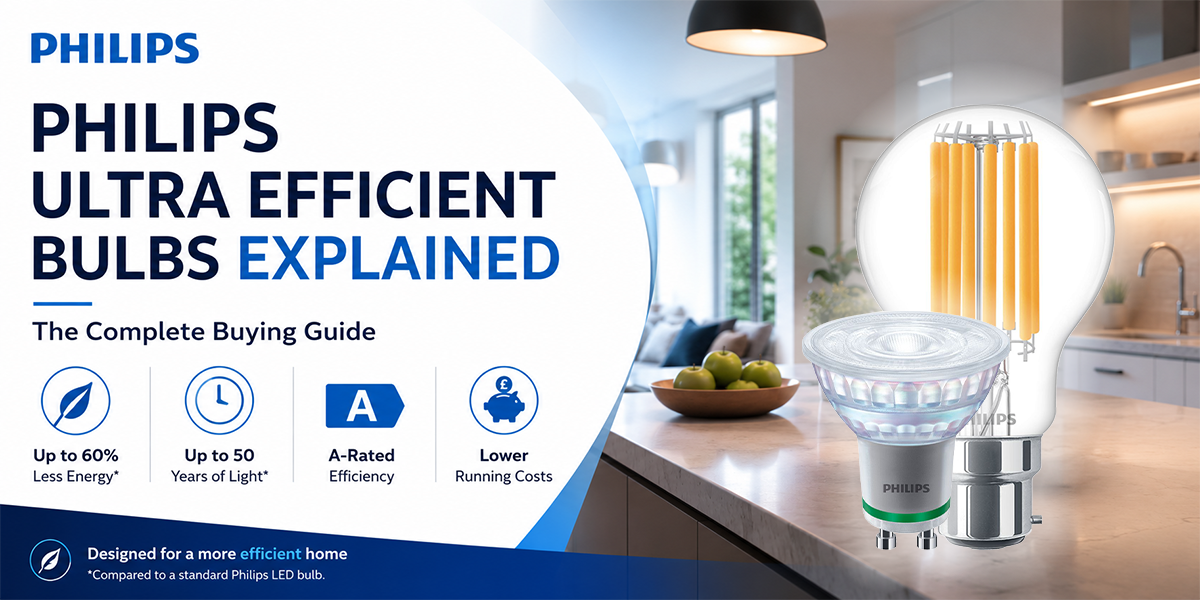
If you're looking for one of the most energy-efficient LED bulbs available today, Philips Ultra Efficient bulbs are setting a new benchmark for home lighting. Designed to deliver the same high-quality light while using significantly less electricity than many standard LED bulbs, they offer an easy way to reduce energy consumption without compromising on brightness or comfort.
In this guide, we'll explain what makes Philips Ultra Efficient bulbs different, how the latest A-rated technology works, and whether they're worth the investment for your home. You'll also discover where they perform best, how much you could save on your electricity bills, and which bulb types are available to suit different rooms and fittings.
Whether you're replacing a single bulb or upgrading your entire home, this guide will help you choose the right Philips Ultra Efficient lighting with confidence.
Why trust this guide?
At Lightsave Home, we specialise in high-quality lighting solutions from leading brands, including Philips. This guide has been created to help homeowners understand the benefits of Philips Ultra Efficient technology and make informed purchasing decisions based on performance, energy efficiency and real-world use rather than marketing claims.
Table of Contents
- What Are Philips Ultra Efficient Bulbs?
- Why Are They Different?
- Standard LED vs Philips Ultra Efficient
- How Much Money Can You Save?
- Try Our Energy Savings Calculator
- Why Are Philips Ultra Efficient Bulbs A-Rated?
- Up to 50 Years of Light
- Where Should You Use Philips Ultra Efficient Bulbs?
- Available Philips Ultra Efficient Bulb Types
- Are Philips Ultra Efficient Bulbs Worth It?
- Frequently Asked Questions
What Are Philips Ultra Efficient Bulbs?
Philips Ultra Efficient bulbs are the next generation of LED lighting. Using advanced LED chip technology, improved optics and more efficient drivers, they produce the same amount of light while consuming considerably less electricity than conventional LED bulbs.
Many models achieve the highest available Energy Efficiency Class A rating under the current UK and European energy labelling system, making them among the most efficient household light bulbs.
Unlike older low-energy lamps or compact fluorescent bulbs, Ultra Efficient LEDs reach full brightness instantly, provide excellent colour consistency and contain no mercury.
Why Are They Different?
Traditional LEDs already use around 80–90% less electricity than incandescent bulbs.
Philips Ultra Efficient bulbs go even further.
Instead of simply producing more light, Philips redesigned almost every component inside the bulb to improve efficiency.
These improvements include:
- Advanced LED chips
- Precision optical lenses
- Lower internal power losses
- Improved thermal management
- Optimised electronic drivers
The result is more visible light from every watt of electricity consumed.
How Much Money Can You Save?
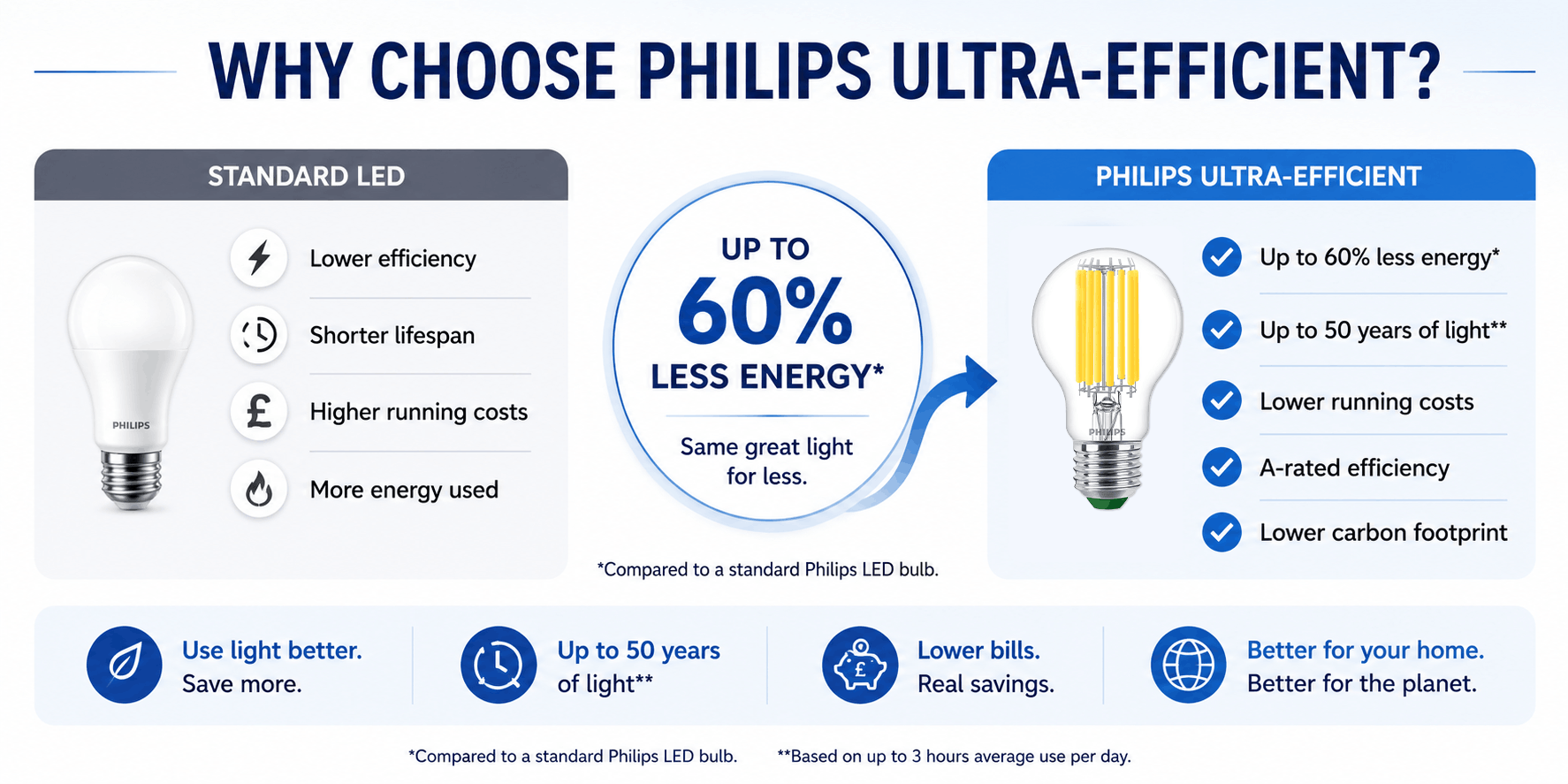
Although Philips Ultra Efficient bulbs cost slightly more to buy, they are designed to save money over many years through lower electricity consumption.
For households replacing multiple bulbs throughout the home, the savings can become significant over the lifetime of the lamps.
For example, replacing older halogen bulbs or first-generation LEDs with Ultra Efficient models can reduce lighting energy consumption even further while also reducing the frequency of bulb replacements thanks to their exceptionally long lifespan.
Calculate Your Own Savings
Every home is different.
Use our free Energy Savings Calculator to estimate how much you could save by switching to Philips Ultra-Efficient LED bulbs.
Why Are Philips Ultra-Efficient Bulbs A-Rated?
If you've recently shopped for LED bulbs, you may have noticed that many products now carry energy ratings such as D, E or F, even though they're far more efficient than the older incandescent or halogen bulbs they replace. This often leads to the understandable question: how can an LED bulb be rated E or F, and why are Philips Ultra Efficient bulbs rated A?
The answer lies in changes to the energy labelling system.
In 2021, the UK and European energy labels were completely revised to make them easier to understand and to encourage future innovation. The old A+, A++ and A+++ ratings were removed and replaced with a much stricter scale running from A to G.
Rather than simply relabelling existing products, the new system raised the performance standards significantly. As a result, many LED bulbs that previously achieved an A+ or A++ rating are now classified as D, E or F under the updated scale. This doesn't mean those bulbs have become less efficient—it simply reflects the tougher testing criteria.
Philips Ultra Efficient bulbs have been specifically engineered to meet these new, more demanding standards. By producing more light for every watt of electricity consumed, many models achieve the highest available Energy Efficiency Class A rating, placing them among the most energy-efficient household LED bulbs currently available.
For homeowners, this means choosing a Philips Ultra Efficient bulb isn't just about reducing electricity consumption today—it's also about investing in lighting that meets the highest modern standards for energy performance, helping to lower running costs while reducing environmental impact.
A Philips Ultra Efficient bulb rated A under today's energy label can be significantly more efficient than an older LED bulb that once carried an A+ rating under the previous system.
The label changed—the technology improved.
Now that we've explained why Philips Ultra Efficient bulbs achieve the highest energy rating, let's look at another major advantage—their exceptionally long lifespan and why many homeowners describe them as a true "fit-and-forget" lighting solution.
Up to 50 Years of Light
One of the biggest advantages is longevity.
Some Philips Ultra Efficient bulbs are designed to last up to 50,000 hours.
For an average household using lights for around three hours each day, that's potentially several decades of use before replacement.
That means:
- fewer bulb changes
- less maintenance
- reduced waste
- better long-term value
Where Should You Use Philips Ultra Efficient Bulbs?
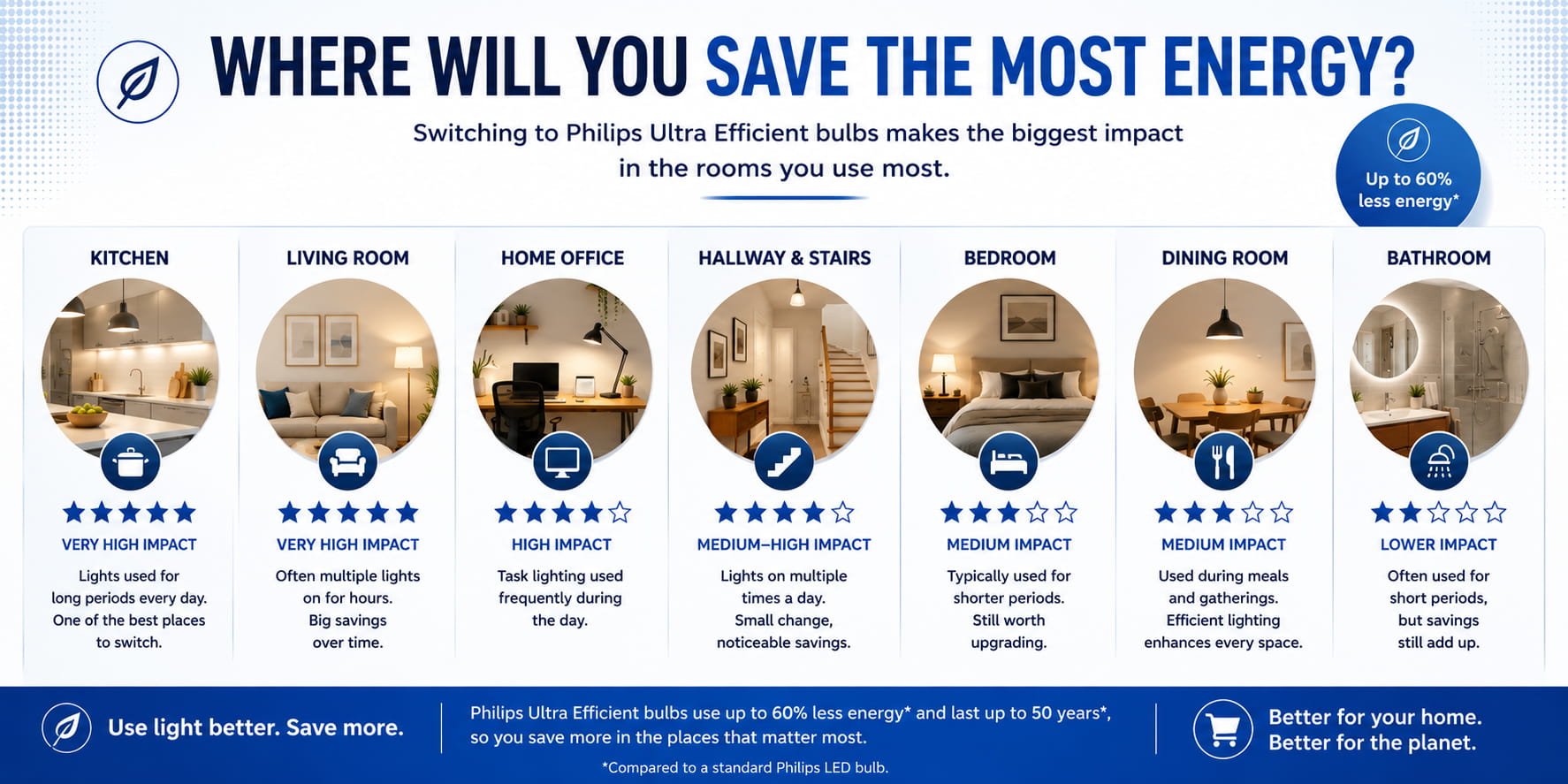
They're particularly suited to rooms where lights are used for long periods every day.
Ideal locations include:
Kitchen
Lighting is often used from early morning until late evening, making energy savings more noticeable.
Living Room
Perfect for everyday lighting while maintaining a warm, comfortable atmosphere.
Hallways
Often overlooked, hallways can have lights switched on frequently throughout the day.
Home Office
Long working hours make efficient lighting especially beneficial.
Utility Rooms
These lights often remain on for extended periods during household chores.
Available Philips Ultra Efficient Bulb Types
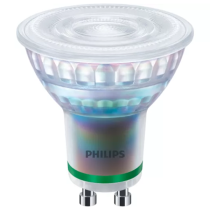
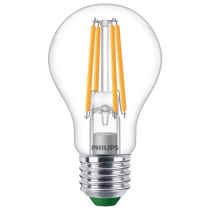
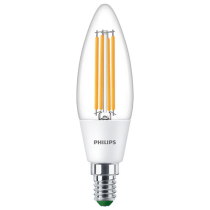
Philips Ultra Efficient technology is available across a growing range of bulb shapes and fittings, making it easier than ever to upgrade your home's lighting without changing the look or functionality of your existing fixtures. Whether you're replacing a standard household bulb, a decorative lamp or a spotlight, you can enjoy the same exceptional energy efficiency and long-lasting performance while choosing the style that's right for your home.
As Philips continues to expand the Ultra Efficient range, homeowners can expect even more options, helping make high-efficiency lighting accessible across an increasing variety of rooms, fittings and applications.
Are Philips Ultra Efficient Bulbs Worth It?
For most households, the answer is yes.
While Philips Ultra Efficient bulbs typically cost a little more upfront than standard LED bulbs, they have been designed to deliver exceptional value over their lifetime. By using significantly less electricity while maintaining the same high-quality light output, they can help reduce your lighting costs year after year.
If you're only replacing a single bulb that's switched on occasionally, the savings may be relatively modest. However, for lights used every day—such as those in kitchens, living rooms, hallways and home offices—the reduced energy consumption and impressive lifespan can make a noticeable difference over time.
Rather than simply looking at the purchase price, it's worth considering the total cost of ownership. A bulb that lasts longer, consumes less electricity and requires fewer replacements can often represent better value than a cheaper alternative.
See the Savings for Yourself
Every home is different, and the potential savings depend on how many bulbs you replace and how long they're used each day. That's why we've created our Energy Savings Calculator, allowing you to compare your current lighting with Philips Ultra Efficient bulbs and estimate how much you could save on your electricity bills.
Try our Energy Savings Calculator to see your potential savings.
Still Not Sure Which Bulb Is Right for You?
Choosing the correct bulb doesn't have to be complicated. If you're unsure which Philips Ultra Efficient bulb is best for your home, our friendly lighting specialists are here to help.
Whether you need advice on the right bulb shape, cap type, brightness or colour temperature, we'll be happy to point you in the right direction and help you find the ideal solution.
Contact the Lightsave Home team for expert lighting advice.
Frequently Asked Questions: Philips Ultra-Efficient LED Bulbs
Are Philips Ultra-Efficient bulbs brighter?
No. They produce similar brightness to standard LED bulbs while using less electricity.
Why are they A-rated?
Their improved efficiency means they deliver more light output for every watt of power consumed, qualifying many models for an A energy rating.
Do they work with dimmer switches?
Only dimmable versions should be used with compatible LED dimmer switches. Always check the product specification before installation.
Can I replace existing LED bulbs?
Yes. As long as you choose the correct cap type (such as E27, B22 or GU10) and the appropriate brightness, Philips Ultra Efficient bulbs can directly replace most existing LED lamps.
Are they worth paying more for?
For lights used regularly, the reduced energy consumption and exceptionally long lifespan usually offset the higher purchase price over time.
Conclusion
Philips Ultra Efficient bulbs represent one of the biggest advances in household LED lighting for many years. They combine outstanding energy efficiency, long life and high-quality light in a range designed to reduce electricity consumption without compromising performance.
Whether you're replacing a single bulb or upgrading your entire home, choosing Philips Ultra Efficient lighting is an investment in lower running costs, fewer replacements and a more energy-efficient home.
Ready to Make the Switch?
Philips Ultra Efficient bulbs are designed for homeowners who want outstanding light quality, lower energy bills and fewer bulb replacements. Whether you're replacing a single lamp or upgrading your entire home, you'll benefit from long-lasting performance and exceptional efficiency.
Browse the Philips Ultra Efficient range and discover a smarter, more economical way to light your home.
- Up to 60% less energy
- Up to 50 years of light
- A-rated efficiency