
Philips Warm White vs Cool White: Which Light Colour Is Best for Your Home?
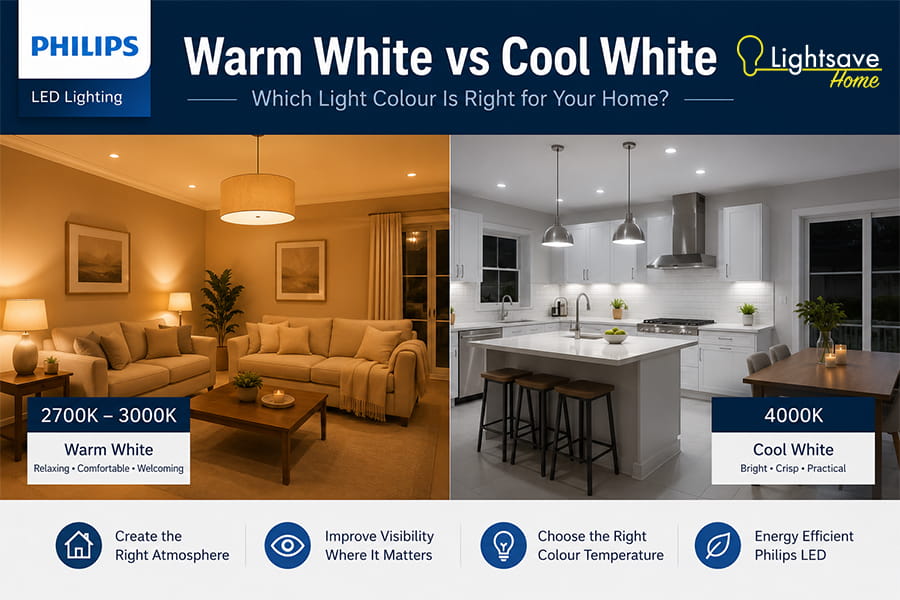
Choosing the Right Philips Light Colour
Choosing the right LED bulb isn't just about brightness or energy efficiency – the colour of the light can completely change how a room looks, feels and functions. Whether you're creating a cosy living room, a bright family kitchen or a productive home office, selecting the right colour temperature helps you get the most from your lighting.
One of the most common questions homeowners ask is whether they should choose Philips Warm White or Philips Cool White LED bulbs. While both provide excellent energy-efficient lighting, they're designed for different environments and activities. Warm White creates a soft, relaxing atmosphere that's ideal for living spaces and bedrooms, while Cool White delivers a brighter, cleaner light that's perfect for kitchens, bathrooms and task-focused areas.
In this guide, we'll compare Philips Warm White and Cool White lighting side by side, explain where each colour temperature works best, highlight common mistakes to avoid and help you choose the right Philips LED bulbs for every room in your home.
If you're looking for a more detailed explanation of colour temperature, Kelvin ratings and Colour Rendering Index (CRI), we also recommend reading our Colour Temperature & CRI for Home Lighting guide before returning here. This guide focuses on the practical question most homeowners want answered:
Which Philips light colour should I choose for my home?
Why trust Lightsave Home?
With decades of experience supplying lighting solutions for homes, hospitality and commercial environments, we help customers choose the right lighting for every application. As an authorised Philips lighting supplier, we understand the differences between colour temperatures, LED technologies and the products best suited to each room in your home.
Table of Contents
- What Is the Difference Between Warm White and Cool White?
- Philips Warm White vs Cool White at a Glance
- Which Rooms Should Use Warm White?
- Which Rooms Should Use Cool White?
- What About Philips Daylight Bulbs?
- Common Mistakes to Avoid
- Which Philips Light Colour Is Right for You?
- Frequently Asked Questions
What Is the Difference Between Warm White and Cool White?
One of the biggest misconceptions about LED lighting is that Warm White and Cool White refer to the brightness of a bulb. In reality, they describe the colour of the light the bulb produces, also known as its colour temperature, which is measured in Kelvin (K).
Both Philips Warm White and Philips Cool White LED bulbs can produce the same level of brightness, but they create very different atmospheres within your home.
Warm White bulbs produce a soft, golden light similar to traditional incandescent bulbs. They create a welcoming and relaxing environment that's perfect for spaces where comfort is the priority.
Cool White bulbs produce a cleaner, crisper white light that improves visibility and makes colours appear sharper. This makes them an excellent choice for rooms where you're cooking, cleaning, reading or carrying out detailed tasks.
Rather than asking which colour temperature is better, it's more useful to ask which is better for the way you use each room. The right choice depends on the atmosphere you want to create and the activities that take place in that space.
For most UK homes, Philips offers three common colour temperatures:
| Colour Temperature | Appearance | Best For |
|---|---|---|
| Extra Warm White (2700K) | Soft golden light | Living rooms, bedrooms and dining rooms |
| Warm White (3000K) | Warm natural white | Kitchens, hallways, open-plan living spaces |
| Cool White (4000K) | Bright crisp white | Kitchens, bathrooms, utility rooms and home offices |
You'll also find some Philips products available in Daylight (6000K–6500K), which we'll cover later in this guide. Daylight provides a much cooler, bluish-white light and is typically better suited to garages, workshops and other task-focused environments rather than everyday living spaces.
If you'd like to learn more about Kelvin ratings and Colour Rendering Index (CRI), you can read our dedicated Colour Temperature & CRI for Home Lighting guide. For now, the key thing to remember is that choosing the right colour temperature is about creating the right atmosphere, not simply making a room brighter.
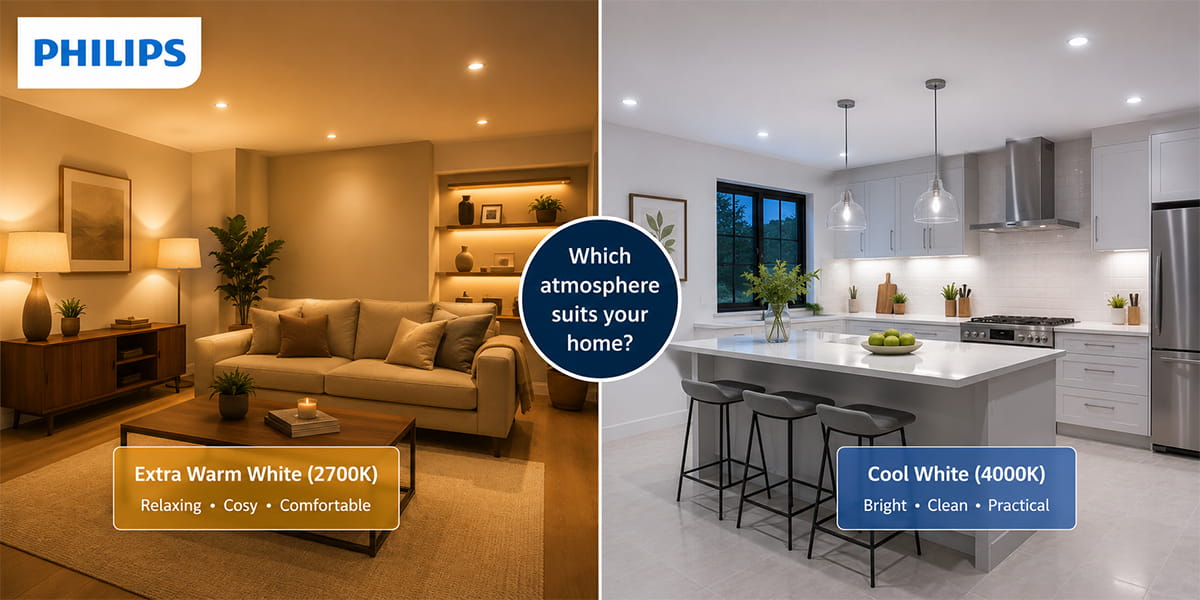
Philips Warm White vs Cool White at a Glance
The easiest way to choose between Philips Warm White and Cool White bulbs is to compare the atmosphere they create, the rooms they suit and the activities they support.
The table below provides a quick overview before we look at each option in more detail.
| Feature | Extra Warm White | Warm White | Cool White |
|---|---|---|---|
| Typical colour temperature | 2700K | 3000K | 4000K |
| Light appearance | Soft and golden | Warm and natural | Clean and crisp |
| Atmosphere | Cosy and relaxing | Welcoming and balanced | Bright and practical |
| Best suited to | Relaxation and evening lighting | Everyday living and mixed-use rooms | Tasks, cleaning and detailed work |
| Recommended rooms | Bedrooms, living rooms and dining rooms | Hallways, kitchens and open-plan spaces | Bathrooms, kitchens, utility rooms and home offices |
| Works well with | Warm woods, creams, reds and traditional interiors | Neutral colours and most interior styles | Whites, greys, stone and contemporary finishes |
| Main advantage | Creates a comfortable evening atmosphere | Offers a versatile balance of warmth and clarity | Provides clearer visibility for practical activities |
| Possible drawback | May feel too soft in task-focused rooms | May not create the strongest cosy or clinical effect | Can feel harsh in bedrooms and relaxing spaces |
For many homes, there is no need to choose one colour temperature for every room. A carefully planned combination usually delivers the best result.
You might use 2700K Philips bulbs in the living room and bedrooms, 3000K in hallways or open-plan spaces, and 4000K in bathrooms, utility rooms and work areas. This allows each room to feel comfortable while still providing the clarity needed for everyday tasks.
The next section looks more closely at where Warm White works best and how to decide between 2700K and 3000K.
Which Rooms Should Use Warm White?
Warm White lighting is all about creating a space that feels comfortable, inviting and relaxing. Rather than drawing attention to the lighting itself, it enhances the atmosphere of a room, making it somewhere you want to spend time.
Philips Warm White LED bulbs are an excellent choice for rooms where comfort takes priority over visibility. They produce a softer light than Cool White, helping to create a welcoming environment that's perfect for relaxing after a busy day or entertaining family and friends.
Living Rooms
The living room is one of the best places to use Warm White lighting. Whether you're watching television, reading a book or enjoying an evening with family, a softer colour temperature creates a cosy atmosphere that makes the room feel more comfortable.
For many modern living rooms, 2700K Extra Warm White is the preferred choice, particularly when paired with dimmable Philips LED bulbs. If your living room is part of a larger open-plan space, 3000K Warm White can provide a slightly brighter feel while still maintaining a welcoming ambience.
Bedrooms
Bedrooms should encourage relaxation and restful sleep, making Warm White the natural choice. The softer light is less harsh on the eyes in the evening and creates a calm environment that's ideal for winding down before bed.
Philips Warm White bedside lamps, wall lights and ceiling lighting all work together to create a peaceful atmosphere without making the room feel too bright.
Dining Rooms
Warm White lighting complements dining spaces by making food appear more appetising and creating a relaxed setting for family meals or entertaining guests.
Pendant lights above dining tables often look particularly effective with Philips Warm White LED filament bulbs, adding warmth and character to the room.
Hallways and Landings
Hallways don't always need the crisp brightness of Cool White lighting. In many homes, 3000K Warm White provides an ideal balance, offering enough brightness to move around safely while maintaining a welcoming first impression as you enter the house.
This slightly brighter warm tone also works well in open-plan homes where the hallway flows naturally into the kitchen or living area.
Open-Plan Living Spaces
Many modern homes combine the kitchen, dining and living areas into one large space. In these situations, 3000K Warm White is often the most versatile option.
It provides enough clarity for everyday activities while still creating a comfortable atmosphere throughout the room. Using the same colour temperature across connected spaces also helps create a consistent look and feel.
Quick Recommendation
If you're unsure which Warm White colour temperature to choose:
- 2700K – Best for relaxing spaces such as living rooms, bedrooms and dining rooms.
- 3000K – Ideal for hallways, kitchens, open-plan living areas and homes where you want a brighter, more modern appearance without moving to Cool White.
Choosing between these two options often comes down to personal preference, but both provide the comfortable, welcoming light that Philips is known for.

To help you decide whether Warm White or Cool White is the better choice for more practical areas of your home, we'll now look at where Philips Cool White performs best and why it's often the preferred option for kitchens, bathrooms and workspaces.
Which Rooms Should Use Cool White?
While Warm White lighting is designed to create a relaxing atmosphere, Philips Cool White LED bulbs are all about improving visibility and helping you carry out everyday tasks with greater clarity.
With a colour temperature of around 4000K, Cool White produces a bright, crisp light that makes rooms feel fresh, clean and spacious. It's an excellent choice wherever good visibility is more important than creating a cosy ambience.
Kitchens
The kitchen is one of the most popular places to install Philips Cool White lighting. Preparing food, reading recipes and carrying out everyday tasks all benefit from a brighter, cleaner light.
Cool White also helps worktops, cupboards and appliances appear sharper and more defined, making the whole room feel fresh and modern.
If your kitchen forms part of an open-plan living area, you may prefer 3000K Warm White throughout the space for a more consistent appearance. However, for dedicated kitchens where practicality comes first, 4000K Cool White is often the better choice.
Bathrooms
Bathrooms naturally suit Cool White lighting because it provides excellent visibility for everyday routines such as shaving, applying make-up and styling hair.
Many homeowners choose Philips Cool White LED bulbs around mirrors or vanity units because colours appear more accurate and facial details are easier to see.
Combined with modern white tiles and chrome fittings, Cool White also helps bathrooms feel brighter, cleaner and more spacious.
Utility Rooms
Laundry rooms, boot rooms and utility spaces are practical environments where visibility matters far more than ambience.
Philips Cool White bulbs make it easier to sort washing, read product labels and complete household chores, while also making smaller utility rooms feel brighter and more open.
Home Offices
If you regularly work from home, the right lighting can make a noticeable difference to comfort and productivity.
Philips Cool White lighting helps improve concentration by providing a clear, neutral light that's well suited to reading documents, using computers and carrying out detailed work.
Unlike warmer colour temperatures, Cool White creates a more alert working environment without feeling excessively clinical.
Garages and Workshops
Garages, sheds and home workshops often require the brightest lighting in the home.
Whether you're carrying out DIY projects, finding tools or working on a vehicle, Philips Cool White bulbs provide excellent clarity, making it easier to see fine details and reducing eye strain during longer tasks.
For specialist workshops or areas requiring maximum visibility, some homeowners may even prefer Philips Daylight bulbs, which we'll look at in the next section.
Quick Recommendation
If your priority is seeing clearly rather than relaxing, Philips Cool White is usually the right choice.
It works particularly well in:
- Kitchens
- Bathrooms
- Utility rooms
- Home offices
- Garages
- Workshops
Choosing the correct colour temperature for each room doesn't just improve how your home looks—it makes everyday activities easier and more enjoyable.
What About Philips Daylight Bulbs?
Philips Daylight LED bulbs produce the coolest light found in most domestic lighting ranges, typically between 6000K and 6500K. Unlike Warm White and Cool White, Daylight has a crisp, bluish-white appearance that closely resembles natural daylight on a bright afternoon.
While this colour temperature offers exceptional visibility, it isn't designed for every room in the home.
In fact, one of the biggest mistakes homeowners make is assuming that brighter automatically means better. In many living spaces, Daylight lighting can feel too harsh, making rooms appear clinical rather than comfortable.
Where Philips Daylight Works Best
Daylight bulbs are best suited to areas where maximum visibility is the priority.
These include:
- Garages
- Workshops
- Utility rooms
- Hobby rooms
- Craft rooms
- Home gyms
- Storage areas
In these spaces, Daylight lighting makes it easier to distinguish colours, locate tools and carry out detailed work with confidence.
Where You Should Avoid Daylight
For most everyday living areas, Daylight lighting is usually not the best choice.
Living rooms, bedrooms and dining rooms benefit from warmer colour temperatures that create a more relaxing atmosphere, while kitchens and bathrooms are generally better suited to Cool White lighting.
Installing Daylight bulbs throughout an entire home often results in interiors that feel cold, overly bright and less inviting, particularly during the evening.
Philips Gives You the Flexibility to Choose
One of the advantages of choosing Philips LED lighting is the wide range of colour temperatures available across many of its most popular bulb types.
Whether you're replacing a GU10 spotlight, GLS bulb, Candle bulb or Golf Ball bulb, you'll often find Warm White, Cool White and, in selected ranges, Daylight options to suit the way each room is used.
Rather than choosing one colour temperature for your whole home, many homeowners achieve the best results by selecting the most appropriate Philips bulb for each individual space.
Which Philips Colour Temperature Should You Choose?
Here's a simple guide:
- 2700K Extra Warm White – Relaxing spaces where comfort comes first.
- 3000K Warm White – Everyday living with a balance of warmth and clarity.
- 4000K Cool White – Practical rooms where visibility is important.
- 6000K–6500K Daylight – Specialist areas requiring maximum brightness and detail.
Choosing the right colour temperature doesn't just improve how your lighting looks—it helps every room perform exactly as it's intended.

Whether you're replacing a single bulb or planning a complete lighting upgrade, understanding how each colour temperature affects your home makes choosing the right Philips LED bulb much easier. Before making your final decision, it's worth looking at a few common mistakes that can easily be avoided.
Common Mistakes to Avoid
Choosing the right Philips LED bulb is about more than simply matching the fitting or selecting the brightest option. The colour temperature you choose can have a significant impact on how comfortable and practical each room feels.
Before making your decision, here are some of the most common mistakes homeowners make—and how to avoid them.
Choosing One Colour Temperature for the Entire House
It's tempting to buy the same bulb for every room, especially when replacing multiple lamps at once. However, different rooms are used for different activities, so one colour temperature rarely suits an entire home.
A better approach is to match the lighting to the way each room is used. Warm White creates a relaxing atmosphere in living areas, while Cool White provides the clarity needed in kitchens, bathrooms and workspaces.
Assuming Brighter Means Better
Many people believe a cooler light automatically means a brighter bulb. In reality, brightness is measured in lumens, while Warm White, Cool White and Daylight simply describe the colour of the light.
Two Philips LED bulbs with the same lumen output can appear equally bright but create completely different moods.
When choosing a replacement bulb, consider both the brightness you need and the atmosphere you want to create.
Using Daylight Lighting in Living Areas
Daylight bulbs have their place, but they're often installed in rooms where they don't create a comfortable environment.
While Daylight is excellent for garages, workshops and hobby rooms, it can make living rooms and bedrooms feel cold and clinical, particularly during the evening.
For most homes, Warm White or Cool White will provide a much more balanced and enjoyable lighting experience.
Mixing Colour Temperatures in the Same Room
Installing Warm White and Cool White bulbs in the same room is another common mistake.
For example, combining Warm White ceiling lights with Cool White table lamps can create an uneven appearance and make a room feel visually inconsistent.
Where possible, keep the main lighting within a room at the same colour temperature. This creates a cleaner, more cohesive look and allows your furniture, décor and wall colours to appear more natural.
Forgetting About Dimmers
If your existing lighting is controlled by a dimmer switch, make sure you choose dimmable Philips LED bulbs.
Using a non-dimmable bulb on a dimmer circuit can lead to flickering, buzzing or reduced bulb life. Philips clearly identifies which products are dimmable, making it easy to select the correct option when replacing existing lighting.
Not Checking the Existing Bulb
Before ordering a replacement, always check:
- The bulb fitting (GU10, E27, B22, E14, G9 and others)
- The required brightness (lumens)
- Whether the bulb is dimmable
- The colour temperature that best suits the room
Taking a few moments to confirm these details helps ensure your new Philips LED bulbs provide the look and performance you're expecting.
Our Recommendation
If you're still undecided, start by thinking about how the room is used rather than how bright you think it should be.
Ask yourself:
- Is this room mainly for relaxing?
- Is it used for cooking, working or applying make-up?
- Will the lights mostly be used during the evening?
- Do I want the room to feel cosy or practical?
Answering these questions will usually make choosing the right Philips colour temperature much easier than simply comparing Kelvin ratings.
Lightsave Home Expert Tip
If you're still unsure which Philips LED bulb to choose, don't start with the Kelvin rating—start with how you use the room.
- Relaxing spaces such as living rooms and bedrooms are usually best suited to 2700K Extra Warm White.
- Everyday family areas and open-plan spaces often benefit from the balanced look of 3000K Warm White.
- Task-focused rooms including kitchens, bathrooms and home offices are ideal for 4000K Cool White.
- Specialist workspaces such as garages and workshops are where Philips Daylight performs at its best.
Which Philips Light Colour Is Right for You?
Choosing between Philips Warm White, Cool White and Daylight doesn't have to be complicated. Once you understand how each colour temperature affects the atmosphere and functionality of a room, selecting the right LED bulb becomes much easier.
For most homes, there's no single "best" option. Instead, the ideal approach is to match the light to the way each room is used.
- Choose 2700K Extra Warm White for cosy, relaxing spaces such as living rooms, bedrooms and dining rooms.
- Choose 3000K Warm White if you prefer a brighter, more modern feel while still maintaining a welcoming atmosphere.
- Choose 4000K Cool White for kitchens, bathrooms, utility rooms and home offices where clarity is important.
- Choose 6000K–6500K Daylight for garages, workshops and other areas where maximum visibility is essential.
Philips has built a reputation for producing high-quality LED lighting that combines excellent energy efficiency, reliable performance and a wide choice of colour temperatures. Whether you're replacing a single bulb or upgrading the lighting throughout your home, selecting the correct colour temperature will make just as much difference as choosing the right fitting or brightness.
By thinking about how each room is used, you'll create a home that's not only well lit but also more comfortable, practical and enjoyable to live in.
Find the Right Philips LED Bulb for Your Home
Browse our extensive range of Philips LED lighting, including Warm White, Cool White and Daylight bulbs available in popular fittings such as GU10, GLS, Candle, Golf Ball, MR16 and more. Whether you're replacing a single bulb or upgrading your entire home, we're here to help you choose the perfect lighting.
Shop Philips LED LightingFrequently Asked Questions: Philips Light Bulb Colour Temperature
Warm White lighting (2700K–3000K) creates a soft, comfortable atmosphere that's ideal for relaxing spaces such as living rooms and bedrooms. Cool White lighting (around 4000K) produces a brighter, cleaner light that's better suited to kitchens, bathrooms and workspaces where good visibility is important.
For most kitchens, 4000K Cool White is the preferred choice because it provides excellent visibility for food preparation and everyday tasks. If your kitchen is part of an open-plan living space, 3000K Warm White can offer a better balance between practicality and comfort.
Bedrooms are generally best lit with 2700K Extra Warm White lighting. The softer colour temperature creates a relaxing environment that's ideal for winding down in the evening and complements bedside lamps, ceiling lights and wall lights.
Most bathrooms benefit from 4000K Cool White lighting. It provides clear, natural-looking illumination that's ideal for shaving, applying make-up and other daily routines, while helping the room feel bright and clean.
Not usually. Philips Daylight bulbs (6000K–6500K) are designed for areas where maximum visibility is required, such as garages, workshops and hobby rooms. For most living areas, Warm White or Cool White lighting creates a more comfortable atmosphere.
No. Electricity consumption depends on the bulb's wattage, not its colour temperature. A Philips Warm White and Cool White LED bulb with the same wattage will use the same amount of electricity, while producing different colours of light.
Yes, but it's generally best to avoid mixing different colour temperatures within the same room. Using Warm White in living areas and Cool White in practical spaces creates a natural flow throughout the home while keeping each room visually consistent.
Yes. Many Philips LED bulbs are available in 2700K Extra Warm White, 3000K Warm White, 4000K Cool White and selected 6000K–6500K Daylight options, depending on the bulb type and product range.